So here's the scenario, a group of Muslims go into America vandalise a church, remove a few Bibles and burn them . The newspaper headlines the next morning will read " Muslim terrorists linked to Al Qaeeda vandalise church". The news will go viral with every news channel from CNN to BBC reporting on the same story.Normal televison viewing will probably be interrupted to allow President Barack Obama to make an emergency speech to the people of America regarding "muslim militia" attacking Christianity and the Bible and how he will deploy soldiers to protect the people of America from terrorism.Now on the flip side of things....The American soldiers who I call terrorists go into Afghanistan, rape the country of its wealth, rape the women of their dignity and pride,kill innocent civilians, burn the Quraan and have absolute no respect for the culture or the people of the country...Instead of there being a global outburst on the behaviour of the American soldiers, the American government has downplayed the situation by simply issuing and apology letter to the Afghanistan government and calling for an internal investigation as soon as possible.Ironically, the same episode has occurred in Iraq as well around ten months ago.Seems to me that the American troops are just too stupid to learn from their mistakes. The American soldiers in Afghanistan are supposedly there to save the people of the country from the Taliban or the so called "terrorists" and assist the country to the path of democracy. Judging from the behaviour of the soldiers, I ask you...WHO ARE THE REAL TERRORISTS?
Afghan workers at the main American military base, Bagram Air Field, saw soldiers dumping books in a pit where garbage is burned and noticed Qurans and other religious material among the trash. If the workers had not noticed this despicable act, and spread the word the American soldiers would have continued on their mission to burn the Quraans. Whilst we have a stupid American president telling Pastor Terry Jones that he will not condone the burning of the Quraan on American soil, the presidents own troops are involved in this despicable act on Muslim soil, in a Muslim country. This definitely adds further insult to injury.
Eighteen-year-old Mohammad Shaker said he first heard about the Quran burning on Tuesday in Kabul, and he and other members of his mosque decided to take to the streets Wednesday after morning prayers. "This is not the first time they're doing these things. They are killing civilians and taking photos of them. Every day they kill civilians with airstrikes. We can't accept their crimes in our country," Shaker said with regards to the American soldiers.
When Saudi national Hamza Kashghari tweeted inappropriate comments regarding the Prophet (saw), the Muslim world was up in arms against him to the point that many have called for his beheading. My question is this: With such a despicable and disgusting act carried out by American soldiers, why haven't our Muslim governments created a global outcry in unison against the atrocities committed by the terrorist American government? Why haven't Middle Eastern countries taken a stance on this matter? It's about time that Muslim countries together impose their own sanctions on Westen governments like America crippling their economies further until justice is served.
To the ignorant forces of the west who choose to vilify Islam and destroy the book of Allah Almighty,remember that God Almighty himself has promised the protection of His scriptures. As Allah says: "We have without doubt, sent down the message and We will assuredly guard it (from corruption.)" (15:9)
Amongst the signs of the last hour is that the Quran will disappear(or will be lifted up). There is a hadith in ibn kathir with regards to the signs of the end of times which states something to the effect that people will only know the shahada. When asked where they learnt it from they will say we heard our forefathers saying this so we say it and they will enter jannah because of this.This hadith is also in bukhari.This shows that there will be no Islamic knowledge and people will have no guidance to refer to. However, the Quraan and the hadith will remain in the hearts of the thousands of students across the globe who continue to memorise the Quraan everyday. To the ignorant western forces who continue to wage wars on Islam in the name of democracy, YOU WILL NEVER SUCCEED!!
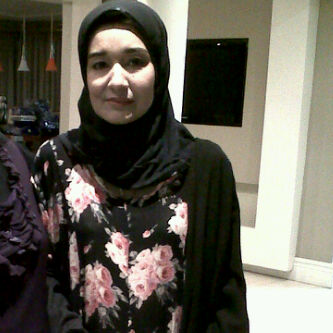
This is a picture of Dr. Fawzia Siddiqui...The sister of Aafia Siddiqui.My aunt met her a few days ago and shared this picture with me. She is currently in South Africa to discuss her sisters plight with the local community.Her sister has been tortured and abused at the hands of the American government...The following paragraphs are excerpts from her radio interview.....
Inna lillahi wa inna ilayhi raji'un...
'Indeed she has captured the hearts of many Muslims and non-Muslims around the world. Her plight and difficulties has created an ocean, the content of which is supplied by the tears of millions of supporters around the globe. Aafia Siddiqui, 39, who was accused and convicted of assault with intent to murder, was sentenced in September 2010, to 86 years in prison by a United States district court.'
Radio Islam International caused that ocean of tears to overflow, in an interview with Aafia’s sister, Dr. Fawzia Siddiqui.
Speaking to Ml. Sulaiman Ravat on the Sabaahul Muslim programme, Dr. Fawzia Siddiqui gave the listeners of Radio Islam an insight into the current happenings of our sister’s life.
“She is not doing well…apparently she is being slow poisoned. There is also a rumour of her being pregnant…and these are higher authorities in the prison and in the Pakistan council who informed us about this.”
Apparently there is a letter which states these allegations however, Dr. Fawzia is still waiting to receive the letter. Dr. Fawzia mentioned that the family had some sort of communication with Aafia. The family was granted 10 minutes a day to speak to their beloved after much difficulty.
“We were allowed phone calls after about two years of struggle. We were 300 minutes per month.”
Unfortunately, on the 28 October 2011, even those privileges were cut away. Dr. Fawzia stated a possible reason for this.
“She had agreed to signing for the appeal and whichever attorney we, as a family would recommend for her.”
“And I think it’s almost after she agreed to the attorney that they suddenly shut down the conversations.”
As the words passed through a lump in Fawzia’s throat, the hearts of many listeners crashed into millions of pieces.
“For the first time in 8 years her daughter spoke to her mother (and) made a connection.”
“She was very very concerned about her children, their education and if they were happy…and if they were eating.”
When asked about food, she simply replied “Don’t ask me”.
However the interview made the listeners realize that Allah’s unseen help is like a cloud over Aafia on a hot day. Her spirit of hope during phone calls at times, as described by her sister is absolutely amazing.
“There was a lot of pain and it was obviously pain on both sides I am sure…after some conversations there was hope. There were times were we would be despairing and she would be counseling us.”
There were also reports that her Quraan was thrown into a bin. However, little does the enemy realize, Islaam and Imaan is not only in Quraan. In fact, it lives in the heart.
“She tells her mother that you have no idea how much at peace I am because I know that I am innocent. My Creator knows and the Habib (Prophet Peace be upon him) knows and they are with me and I know that I am in the right.”
Ml. Sulaiman Ravat described it as “A heart wrenching interview”. Dr. Fawzia Siddiqui stated that there is no contact with Aafia since the 28 of October.
It is indeed a responsibility of all Muslims to remember Aafia in their Duaas and to the best of their ability, make all other possible efforts for the freedom of Aafia and all Muslims around the world. Freedom is not a Muslim right…it is a human right!!!
The use of bleaching creams to lighten complexions seems to have reached epidemic proportions in Mali, despite widespread education campaigns.
Women who refuse to bleach often find themselves regarded as second class citizens.
A woman who did not bleach her skin said she is often not offered a chair at baptisms, and is asked to make herself scarce when group photographs are taken at marriages.
A quick survey shows there are more than 100 bleaching products available on the market in the capital, Bamako.
Sold under brand names such as Marie-Claire or Diana, the products come from Morocco, Nigeria, the United States or Saudi Arabia.
Dermatologists estimate that more than half the women in Mali are now using these creams to lighten their skin. These products are costly and often cause pain and blemishes.
So why are so many women in Mali using them? The answer is simple, according to one Malian woman singer: The creams make her white, and impart a certain charm.
But Malian physician Dr Ali Gindo finds bleached skin anything but charming.
"They are just burning themselves," he says. "It's painful and it's awful."
Dr Gindo says bleaching can cause skin cancer and the poorest people are the most at risk, because the cheaper the product, the more dangerous it is.
But he says it is not just poor women are bleaching their skin.
"We have also people who are well educated like lawyers, writers or professors, or people on the TV - and this is a real problem because if people who are leaders of opinion bleach themselves, you can imagine how deep the problem is."
Many of the women who use these products told me they do so because Malian men prefer women with bleached skin.
But male musician Al Hassan Soumali disagrees.
"I don't think Malian men like bleached women," he says. "It's better for Malian women to change their minds."
In the Islamic faith, all children have the right to be clothed fed and protected until they are adults, to receive love and affection from their parents and to be treated as equally as their siblings.
These rights don't end when children become orphans, whose caregivers are primarily responsible for protecting orphans and instilling the values of the Qur'an and an appropriate reverence for God Almighty.
The Qur'an clearly sets a tone for the treatment of orphans in Islam: "Treat not the orphan with harshness" (Qur'an 93:9)
In the sense that the key posture toward orphans should be kindness, orphans belong to the entire community, and everyone takes responsibility for their welfare. Perhaps this can be attributed to a deep spiritual morality that demands Muslims be charitable toward less fortunate others, but the state of being an orphan takes on an even more profound meaning in the Islamic religion.
The Prophet Muhammad (saw) was an orphan, and some of the earliest verses of the Qur'an are devoted to his orphaned childhood. He is said to have himself adopted a former slave and raised him with the same care as if he were his own son.This practice offers some hope of reward later in their lives.
In hadith, or sacred text that delivers oral traditions about the Prophet Muhammad (saw), those who assist orphans are promised the companionship of the Prophet Muhammad in an afterlife (Paradise).
Additionally, if an orphan is wealthy, an orphan's guardian is responsible for protecting the orphan's inheritance until the orphan is legally able to assume control of it himself. The adoptive family is not allowed to combine an orphan's property or wealth with its own: "Give orphans their property, and do not substitute bad things for good. Do not assimilate their property into your own. Doing that is a serious crime." (Surat an-Nisa': 2)
There are consequences, the Qur'an teaches, for taking an orphan's property or giving them lesser grade or quantities of property than is rightfully theirs: "People who consume the property of orphans wrongfully consume nothing in their bellies except fire. They will roast in a Searing Blaze." (Surat an-Nisa': 10)
When orphans are adopted, Islamic practices direct guardians to protect orphan identities, as well, by allowing them to keep their birth parents' names. This preserves their heritage and establishes their connections with other living family members.
It is important to note that it is rare that non-blood relatives assume the care of orphans in Islamic culture. The rules of this faith, which deeply values kinship, require even distant relatives to be called on before a child is considered completely abandoned.
This system of caregiving is an ideal one that seems to ensure the only worry orphans should have is mourning or remembering their parents. It allows continuous stability and makes room for ample nurturing. Ultimately, it also helps to grow a healthy identity.Despite common misunderstandings about the Islamic faith, one thing is certain: Muslim orphans are not ever in a position to be alone.
Orphans at the Al-Birr orphanage assist in a charity campaign
in Jeddah
There is never a dull moment working within a hospital environment. This is one of the reasons why I enjoy my profession thoroughly. Helping someone else in need fills the heart with inner peace and satisfaction. Each day I get to meet people from different walks of life, each one of them having their own wishes, desires, problems, basically all going through the same journey called life. Very often I would meet people who truly become an inspiration to me.One such person is a 29 year old Saudi male nurse who works in the hospital and is a good friend of a colleague of mine. Mr. M is a bright and bubbly person. A happy go lucky young man I would say always greeting everyone cheerfully whilst walking down the corridors. I never really had a chance of knowing him on a personal level. He would always come by the pharmacy to collect medications for his patients and he always came across as having a warm pleasant demeanour and personality.
A few weeks ago he came by the pharmacy to collect his own medication and we started having a conversation.He enquired about my nationality, my qualifications and my family and naturally I then decided to enquire about him. My heart melted when he said " I am an orphan. I don't have any parents nor do I have any siblings.My parents passed away in a car accident. I was only three at the time."
He then told me that his mom's sister looked after him.However, as much as she loves him and cares for him her own children will always come first. As he related his story to me I started seeing a flicker of sadness in his eyes. He went on to say that he never really had much of a childhood. He grew up really fast and tried to become independent from a young age by working part time at his uncles company.By the time he started high school he had learnt how to cook basic meals and iron his own clothes. He didn't want to be a burden to anyone in the household despite the love and affection he received from his aunt and her family.
As Mr. M took his bag of pills and left the pharmacy tears rolled down my eyes. Here was a person who went out of his way for his patients and always appears to be happy and yet deep inside there is an inner sadness.When he left, I sat on the chair with my arms folded and a hundred and one thoughts came to my mind. Whilst many of us would have our parents present at important milestones within our lives such as our first day at school, graduation ceremony or wedding ceremony,an orphan child does not experience this. I then realized how grateful and thankful I should be for still having both my grandmothers and parents in my life.They have always been my backbone and support from the cradle up until now. They held my hand when I took my first steps in life.They were present at my first day at school. They made sure I had the perfect dress with matching accessories for my matric farewell party. They stood with joy and pride the day I graduated from university.If it wasn't for them I would have never been the person that I am today. In my family's eyes I have done them proud to have achieved a lot within my 30 years of existence but to me the biggest achiever is an orphan child like Mr. M, who has attained success without the support of his parents. He has gone through the many obstacles and hardships of life himself to achieve his success. That is the true meaning and the true essence of success.There are many of us who despite having parents fail to appreciate them and yet for many orphans like Mr. M, their only wish and desire is wanting to have their parents with them....... A wish and a dream that will never be fulfilled in this life time but certainly in the hereafter God willing. As Mr. M left the pharmacy I made a silent prayer in my heart for him. May the Almighty fulfill his every wish and desire and grant him success in this world as well as in the hereafter. May he one day have a family of his own to fill the void and emptiness of his own life. Ameen!!!!!!
Journalists have reported an unusual scourge among the Mauritanian nomads - the force-feeding of their girls. For to be fat is considered a sensible ideal for brides-to-be.
Mothers cross sticks around the ankles and squeeze the ends together with rope till the girls cry out in pain. That is one way of forcing daughters to swallow litres of milk and mountains of couscous for days on end until they developed wings of fat hanging from their arms and their skin was traced with silvery stretch-marks - attributes considered the height of feminine beauty in Mauritania.
'They eat and eat, and drink and drink, and when they can't eat anymore we pinch them and sometimes they vomit,' Braika, a mother said. 'When they vomit on purpose, we make them eat the vomit to teach them not to do it again.'
She did not feel guilty about force-feeding her daughter. Only when fattened up, daughters could have the pick of husbands. 'A thin girl could be blown away in the wind, people think she is a stick and she will never find a husband,' she said. Nomads seem to believe a fat girl is a healthy girl. But then the Mauritanian government seems to have realized that in reality, obesity has reached epidemic proportions among Mauritanian women. It is actually killing them. Barely into their 40s, fattened women are dying from obesity-related diseases such as diabetes and heart failure.
Mounina Bint Abdalla is a health consultant who worked for years with the government trying to stamp out force-feeding.But she acknowledged that government radio sketches warning women of the dangers of obesity have had little effect on a society where fatness is revered as a symbol of nobility and good breeding.Nonetheless, force-feeding and the nomadic way of life is fast disappearing, said Mounina.'The country has been hit by years of drought and we simply don't have that kind of quantity of milk now, or the time it takes,' she added.
In the market in the capital Nouakchott, Mounina pointed to all the women working in the stalls selling everything from brightly coloured veils to fake Chanel sunglasses.'Just 15 years ago, women didn't work at all but now all these women are working because life in the city is very expensive,' she said. But despite this, women are still finding ways of fattening themselves up.
A pill-seller said he could not count the number of women who buy steroids meant for cattle.'Some come and buy 20 boxes in one go,' he said. But if force-feeding creates problems for women in later life, the cattle steroids can be an instant killer. Side-effects include renal failure and heart attacks. Dr Maagouiya, the general surgeon at the main hospital in the capital city of Nouakchott, said that without autopsies - which are not permitted in Mauritania - he could not be sure how many lives the steroids had claimed but he believed the figure was high. Yet mothers still come to him to request pills for their daughters, believing that thin girls are shameful because they look 'sick'. To be 'sick' is often a euphemism for having HIV/AIDS in Africa. But the message is getting through to some Mauritanian women, like Mounina's nieces who have started exercising around the stadium as the sun goes down. But they seemed to be doing it reluctantly and said they were trying to lose weight purely for health reasons, not because it would make them more attractive.
Dr Mougiya said he encountered the same attitude when he holds seminars trying to persuade obese women to slim down. 'They tell me that if they lose weight their husbands will leave them because everyone knows that in Mauritania men prefer a fat woman.'
But one thing is finally beginning to shake up popular attitudes to fatness - the explosion of Arab satellite channels obliterating the monopoly held until recently by the state channel.
Mounina's teenage daughters, for instance, say they do not want to be fat like their cousins who are only a few years older then them. They said they want to be 'a normal size' like the Lebanese pop stars.'Now Mauritanian men are looking at Lebanese singers and starting to compare them with us,' said 19-year-old Aicha. 'The men say to their wives 'why are you fat, why aren't you like Britney Spears?'
The lifestyle in Mauritania is changing fast - donkey carts and fruit stalls in Nouakchott are giving way to fast-food restaurants. But then it is all a small beginning. Long, long way to go for the harassed Mauritanian girls.
A close friend of mine sent me this article through email. I thought it was quite an interesting piece of writing and hence I decided to share it with all of you.I do not know who wrote this article and I certainly do not take credit for it.
On 7th August 1996,NASA (1) scientists made an announcement that made front page headlines throughout the world.Within a Martian meteorite,they had found evidence of a microscopic lifeform that may have existed on Mars more than three billion years ago. (2) Although other studies were later published which challenged this conclusion, (3) numerous recent discoveries,for example,the discovery by the Galileo spacecraft, (4) in February 1997,of a possible red-coloured sea under the ice crust of Jupiter's moon,Europa, (5) are raising hopes that we may soon be able to get an answer to one of the oldest and most interesting questions asked by humans-"Is anyone out there,or are we alone in the universe?"
However,it may be that none of us may live to see the day when scientists will give us a definitive answer to this question.For Muslims,that should not be a problem.We already have the answer.Although many Muslims are unaware of the fact,the Quran (6) explicitly mentions the existence of extraterrestrial life.
The existence of creatures of a spiritual nature,such as angels,in the universe,is accepted as a fact by all Muslims,as well as people of other religions, such as Christians.The point that generates excitement among the public,and scientists is the question of whether material lifeforms like ourselves,which can be found by science,do actually exist outside the earth. (7) The objective of this article is to present evidence from the Quran for the existence in the universe,of MATERIAL lifeforms ("Life as we know it").
"Dabbatun"
In Sura 42,Verse 29 (42:29) of the Quran,we are told, "Among His (God's) signs is the creation of the heavens and the earth,and the living creatures that He has scattered through them :and He has power to gather them together when He wills." (8) Before proceeding further,a point or two must be noted.The word "sama",translated "heavens",is also the Arabic for "sky".One may object that the verse refers to creatures in the sky (which would be birds),not in the heavens.However,birds are mentioned seperately from creatures of the heavens in 24:41, "Seest thou not that it is God Whose praise all beings in the heavens and on earth do celebrate,and the birds (of the air) with wings outspread?..." (9) In a note to 42;29,Muhammad Asad states,"In the Quran,the expression "the heavens and earth" invariably denotes the universe in its entireity." (10) The Quran mentions that inanimate objects also worship God:"Do they not look at God's creation, (even) among (inanimate) things- how their (very) shadows turn round,from right to left,prostrating themselves to God..."(16:48). (11) Therefore,may not the creatures spoken of in 42:29 in the heavens,be inanimate creatures of God.No.The next verse,16:49 goes, "And to God doth obeisance all that is in the heavens and earth,whether moving (living) creatures or the angels...". (12) The word translated "living creatures" here is the same as that in 42:29- "Dabbatun".Comments Asad,"The word dabbah denotes any sentient,corporeal being capable of spontaneous movement and is contrasted here with the non-corporeal,spiritual beings designated as "angels" ". (13) In other words,42:29 is referring to precisely the type of lifeforms that science is searching for,not some metaphysical entities.Yusuf Ali says,"Dabbatun:beasts,living,crawling creatures of all kind." (14) This is the same word used in 2:164,"...in the beasts of all kinds that He scatters through the earth...are signs for a people that are wise," (15) and in 24:45,"And God has created every animal from water:of them are some that creep on their bellies;some that walk on two legs;and some that walk on four. God creates what he wills..." (16) Commenting on 42:29,Allama Shabbir Ahmad Usmani says,"From the verse it appears that like on the earth,there are some kinds of animals- living creatures- in the heavens also." (17) On the same verse,Yusuf Ali comments, "Life is not confined to our one little Planet.It is a very old speculation to imagine some life like human life on the planet Mars...it is reasonable to suppose that Life in some form or other is scattered through some of the millions of heavenly bodies scattered through space." (18) From such remarks,the reader will realize that Muslim scholars are well aware of the fact that 42:29 clearly mentions the existence of aliens.
Is there any alien intelligent life ?
Although the discovery of any form of life outside the earth would be dramatic,humankind is especially interested in knowing whether there is any alien intelligent life in the universe.NASA previously had a program on the search for extraterrestrial intelligence (SETI).Although now scrapped due to budget cuts, private SETI organizations (19) have now been made which continue the search.The Planetary Society, (20) a private organization,in which the film director Steven Speilberg (21) is a member of the Board of Directors,has the largest SETI program in the world.So far, no sign of alien intelligent life has turned up.Can the Quran provide an answer?
Sura 27:65 commands,"Say:None in the heavens or on earth, except God,knows what is hidden:nor can they perceive when they shall be raised up (for Judgement)." (22) This shows that,like humans,there are other creatures in the universe that will also be raised from the dead.We are told in 19:93-96,"Not one of the beings in the heavens and the earth but must come to (God) Most Gracious as a servant.He does take an account of them (all),and hath numbered them (all) exactly.And everyone of them will come to Him singly on the Day of Judgement.On those who believe and work deeds of righteousness, will (God) Most Gracious bestow love." (23) From these verses we learn that there are alien lifeforms that,like us,will also be judged according to the works that they do during their lives.Among them are the believers.Therefore,naturally,there will also be those aliens who are unbelievers.The believers will be rewarded.The lifeforms being descibed in the above verses can hardly be expected to be microorganisms.The Quran is referring to creatures of a level of development that makes them morally accountable beings.They must be organisms possessing qualities which we would ascribe to intelligent lifeforms.
In Sura 72:14-15,jinn (a type of spiritual lifeform,which the Quran mention as living on the earth) say,"Amongst us are some that submit their wills (to God),and some that swerve from justice.Now those who submit their wills- they have sought out (the path) of right conduct:But those who swerve- they are (but) fuel for Hell-fire." (24) The Quran mentions that good jinn will be rewarded with Paradise.Summing up from all the above verses,it is clear that Judgement Day is for creatures in the whole universe (Sura 39:68-"The Trumpet will (just) be sounded when all that are in the heavens and on earth will swoon, except such as it will please God (to exempt).Then will a second one be sounded,when,behold,they will be standing and looking on!") (25) and like jinn,aliens will also be sharing Paradise and Hell with humans.In fact,the Quran mentions that Paradise is of a size like that of our present universe- 57:21,"Therefore (vie) with one another for the pardon of your Lord,and for a Paradise as vast as heaven and earh, prepared for those who believe in Allah and His apostles." (26) Therefore, it is not surprising that when we are sharing this universe with aliens,we should share Paradise and Hell with them too.The Quran shows us,therefore,that not only do aliens exist,but among them are also intelligent beings.
Where can aliens be found?
Knowing that aliens,including intelligent lifeforms exist elsewhere, our next question would be,"Where do they live?"Scientists naturally expect them to live on planets.They look for other planets around other stars- planets that have the right conditions to harbour life- in other words,other earths.In October 1995,scientists announced the discovery of the first extrasolar planet around the star 51 Pegasi. (27) Since then,there have been a string of discoveries of other planets.At the time of writing of this article,fifteen planets have been claimed to have been discovered. (28) Although some of these objects have been dismissed as brown dwarfs (including the object around Pegasi 51) by some scientists, (29) at least some of the fifteen objects are agreed upon as being planets.Scientists believe that on potential moons around planets found to be orbiting two stars, the right conditions may exist for life to be present. (30)
In Sura 65:12,we are informed,"God is He Who created seven heavens and of the earth a similar number..." (31) This verse,although usually translated properly,is very commonly misinterpreted by commentators.They give their interpretation that space is divided into seven zones,and likewise,as Yusuf Ali puts it,"the crust of the earth is built up of geological strata one above another". (32) This interpretation arises due to a misunderstanding of what a "heaven" is as mentioned in the Quran.Before continuing further about the topic of aliens,it is necessary to clear up this confusion.The answer can be deduced from verses in the Quran itself and comparing them with our current scientific knowledge about the universe.
Sura 21:30 asks,"Do not the unbelievers see that the heavens and the earth were joined together (as one unit of creation),before we clove them asunder?..." (33) Sura 41:11-12 tell us,"Then turned He to the heaven when it was smoke,and said unto it and unto the earth:come both of you,willingly or loth...Then We ordained them seven heavens...and inspired in each heaven its mandate;and We decked the lowest heaven with lamps..." (34) and Sura 71:15-16,"See ye not how Allah hath created seven heavens in harmony,and hath made the moon a light therin,and made the sun a lamp?" (35) Sura 51:47 informs us,"And it is We who have built the universe with (Our creative) power;and,verily,it is We who are steadily expanding it." (36) Asad,comments on the above verses as follows:about 21:30,"...the above unmistakable reference to the unitary origin of the universe- metonymically described in the Quran as "the heavens and the earth"- strikingly anticipates the view of almost all modern astrophysicists that this universe has originated as one entity from one single element,namely,hydrogen,which became subsequently consolidated through gravity and then seperated into individual nebulae,galaxies,and solar systems,with individual parts progressively breaking away to form new entities in the shape of stars,planets and the latter's satellites"; (37) about 41:11,he explains the word "smoke" as,"a gas- evidently hydrogen gas,which physicists regard as the primal element from which all material particles of the universe have evolved and still evolve..." (38) and says about the verse,"explaining this passage,Zamakhshari observes:"The meaning of God's command to the skies (heavens) and the earth to "come"... is this:He willed their coming into being..."";for 41:12,he explains "seven heavens" as,"a multiplicity of cosmic systems"; (39) about 51:47 he says,"the phrase "inna la-musi'un" clearly foreshadows the modern notion of the "expanding universe"- that is,the fact that the cosmos,though finite in extent,is continuously expanding in space." (40) Finally,three more verses need to be referred to- 50:38,"And verily We created the heavens and the earth and all that is between them...and naught of weariness touched us" (41) ,21:104,"The Day when We shall roll up the heavens as a recorder rolleth up a written scroll.As We began the first creation,We shall repeat it.(It is a promise binding) upon Us.Lo!We are to perform it" (42) ,and 14:48, "One day the Earth will be changed to a different Earth,and so will be the heavens..." (43)
From the verses above,we learn this from the Quran:a heaven is a material entity which arose from the same material as the earth originated from.Initially,there was one gaseous mass.A cleavage process occured resulting in the making of the "seven heavens" and "all that lies between them".The sun,moon and earth are constituants of a heaven.Therefore,a heaven must be larger than a star (sun).When the end of the universe is at hand,the heavens,which till then were in an expanding universe (51:47) will come together.Then,the way our present universe came into being,in a similar manner,a new creation will come into being,containing other heavens and another earth.Any astronomer reading these verses can tell you that there is only one entity that fits the description of a heaven in the Quran- a "heaven" in the Quran must be referring to a "galaxy".According to modern science,the universe arose from a singularity,at the Big Bang,and has since,been expanding.From a primordial gas cloud arose hugh fragments from which the galaxies and their clusters arose.Today,the galaxies are moving apart from each other in space.They are seperated by intergalactic space in which may lurk invisible dark matter,making upto 90% of the total mass of the universe.if there is sufficient dark matter,at some time in the future,the universe will stop expanding and enter a contraction phase in which the galaxies will finally come close together in a Big Crunch marking an end to the present universe.The universe would have returned to a singularity state similar to that from which the present universe arose.Then,once again,scientists predict,a new universe may rebound from the singularity of the Big Crunch,as another Big Bang gives rise to a universe with its own galaxies and planets etc.Verses in the Quran agree amazingly with our current ideas about the universe!
The purpose of our lengthy divergence from the main topic of this article was to prove that the "seven heavens" are not zones into which the universe is divided,but large astronomical entities, the galaxies.Some people have interpretted a heaven as being a solar system.However,while this view may seem appropriate for some verses,it does not tally with all the verses.
The Quran mentions the creation of seven heavens.Asad explains that,"...as regards the "seven heavens",it is to be borne in mind that in Arabic usage...the number "seven" is often synonymous with "several"." (44) I have shown that the heavens are the galaxies and we can see that millions of them exist.Even if we assume that the heaven are some other astronomical objects that arose from the primary gas cloud,they definitely are not literally seven in number,but in the millions.
The relevance of this to our discussion on aliens is that the Sura 65:12 tells us that,as God has created "seven Heavens",He has created,"of the earth a similar number..." Therefore,as there are millions of galaxies,God has also created millions of earths scattered throughout the universe.Usmani comments on 65:12,"The earths as well,He created seven (Usmani thinks literally seven.We know it actually means "many"),as given in the Tradition of Tirmizi etc.It is possible they are not visible, it is possible they are visible,but people think them to be stars or planets,as the scientists of today have predicted the possibility of life on Mars etc..." (45) An important thing to point out in 65:12 is that God does not use the word "worlds",but specifically,"earth".An 'earth' would be a planet that harbours life.Scientists also often speak of looking for other earths.They mean not just any planet,but one sustaining or capable of sustaining life.In his book,The Bible,The Quran and Science, Maurice Bucaille writes,"...it comes as no small surprise to the reader of the Quran to find that earths such as our own may be found in the Universe..." (46)
We have finally arrived at the Quran's answer as to where aliens can be found.They inhabit the millions of earths that God has created among the millions of heavens (galaxies) in the universe. The Quran therefore,gives us a magnificent view of the universe- a universe teeming with life,a place that the late astronomer Carl Sagan described as a "cosmic fugue,with themes and counter- points,dissonances and harmonies,a billion different voices playing the life music." (47)
Will we ever discover aliens?
So far,we have learnt from the Quran that extraterrestrial life,inclucing intelligent life, exists throughout countless earths in the universe.But this is not sufficient to satisfy our curiosity.We want scientists to actually discover aliens.Only after we have found incontrovertible scientific evidence that aliens exist,will our (unbelieving) hearts see that the Quran was correct all along.We actually won't be satisfied till we meet an alien face to face.Is there any chance that in the future we will actually discover,through science,the existence of aliens and establish some kind of contact with them or even meet them?
To get some idea on this matter,we must return to Sura 42:29.We are told over there that the scattering of living creatures in the heavens and the earth is a "sign".What is a sign?Sura 6:104 says,"Momentous signs have come to you from your Lord.He that sees them shall himself have much to gain,but he who is blind to them shall lose much." (48) Sura 6:109,"They solemly swear by Allah that if a sign be given them they would believe in it." (49) Sura 7:73,"A clear proof has come to you from your Lord.Here is Allah's she-camel:a sign for you." (50) Clearly,a sign is something which we can see,or at least,experience with our senses.Otherwise,it would not be a sign.Some signs are those that God showed to humans in the past.Other signs remain for God to show us in the future-"Soon we will show them Our Signs in the (furthest) regions,and in their own souls,until it becomes manifest to them that this is the Truth" (41:53). (51) THERFORE,SURA 42:29 CONTAINS A PROPHESY THAT A TIME WILL INDEED COME IN THE FUTUTE WHEN HUMANS WILL DISCOVER ALIENS.
In Sura 55:33-34,we are addressed,"O ye assembly of Jinn and men!If it be you can pass beyond the regions of the heavens and the earth,pass ye!Not without authority will ye be able to pass!Then which of the favours of your Lord will ye deny?" (52) Why does God ask us to go into space? There must be some purpose.Maybe it be for us to fulfil some grand destiny in store for our species- maybe to become a galactic race,a respectable part of the galactic community of civilizations.Maybe,it is our travels in space that may lead to our encounter with aliens and fulfil the prophesy in 42:29.Only time will tell.In anticipation of the time when we become space-travellers,we are told in Sura 29:22, "Neither on earth nor in heaven shall you be beyond reach:nor have you any guardian or helper besides Allah." (53)
To reach other civilizations,we must be capable of feasible interstellar transport. Might we one day be capable of undertaking such a voyage?Sura 16:8 says,"And (it is He Who creates) horses and mules for you to ride...and He will yet create things of which (today) you have no knowledge." (54) The latter part of this verse is often translated in the present tense but as Asad points out,"The use in this context,of the aorist "yakhluqu" implies the future tense ("He will create") ...Since this reference to God's continuing creation comes immediately after a mention of primitive means of transport,it obviously relates to other- as yet unknown- things of the same category:that is to say,to new means of transport which God unceasingly creates through the instrumentality of the inventiveness with which He has endowed man's mind." (55) Therefore,it is possible that we may one day make the spacecraft required for interstellar travel.After all,God Himself has encouraged us to,"pass beyond the regions of the heavens".Sura 42:29 ends with the statement that God has the power to gather the creatures of the heavens and earth together if He wills.This also points to the possibility of our meeting aliens in the future.However,this gathering may well refer to that which will occur on Judgement Day as mentioned in Sura 19:93-96 (see above).
Man's position among creation
The most revolutionary discoveries in history have been those which altered the way humans perceived themselves in the universe.We discovered that the earth was not at the centre of the universe.We discovered that our Sun was a very ordinary star located in an insignificant part of an ordinary galaxy,which was only one of millions of galaxies.These discoveries should have humbled us.Yet,even today,many of us triumphantly proclaim ourselves as being the most supreme creation of God.It is common to ascribe our cherished position among all living things to our higher intellectual abilities.If we were to find out that there are other intelligent beings in the universe,and that some may be intellectually more superior to us,where would that leave us ?Would we finally be dethroned?
Sura 17:70 informs us,"Verily We have honoured the children of Adam...and preferred them above many of those whom We created with a marked preferment." (56) Many translations fail to mention the "marked preferment" in the verse,although the verse contains the Arabic "tafzelan" which conveys this.Note that the verse mentions that there are other creatures besides humans,who have also been given a position of distinction,and humans have been preferred above many,not all,of these creatures.Usmani states in a comment on this verse,"Under this verse a debate is opened:Who is superior- Man or Angel?But logically this verse does not decide the issue." (57) Another scholar has written,"From this (verse) it is evident that whatever superiority humans have got over other creatures is not whole.Allah's creatures contain such creatures upon which humans have got no superiority."It must be remembered here that while so far we have been discussing material alien lifeforms,the debate of man's position in creation includes both material and spiritual creatures of God.Some early authorities,such as Hasan,have not accepted the word "akser" mentioned in 17:70 as meaning "many".Hasan maintains that the word "akser",as used in 17:70, should be understood as meaning "all",since the same word is used in 26:233 and 10:36,where it would be inappropriate to take its meaning as "many" but rather as "all".With such a substitution in verse 17:70,the meaning would be altered to mean that man is preferred by God over all creatures.
The debate on man's status continues among scholars and also among the public.Let us make an analogy to the debate of whether man is superior to woman.Suppose for a moment that we hand the trophy to man and let him enjoy his "superior" position.On the Day of Judgement,it will only be deeds that count and good women will go to Paradise and bad men will burn in Hell.Who would have been more superior?As you can see,in the final analysis,any debate on the status of a race,or species is useless.From earlier verses mentioned in this article,the reader will remember that,according to the Quran, God will judge humans as well as aliens on the basis of their deeds and reward them accordingly.Many humans will be sent to Hell for their wrongdoings. At the same time there will be aliens who will be rewarded for their good deeds.Who would be more superior- the unbelieving human or the faithful alien?The answer is obvious.Therefore,what's the use of debating this point?Status of a creature is relative to its moral conduct.Sura 95:4-5 states, "Surely We created man of the best stature,then We reduced him to the lowest of the low." (58)
Islam and the geocentric universe
It is the fanciful idea of religion-bashers that the discovery of extraterrestrial life will undermine any remaining credibility that religion may have.In the case of Islam,as one can see from this discussion,that can hardly be the case.On the contrary,such a discovery would verify the truth of the statements contained in the Quran relating to the subject of alien life,and strengthen the position of Muslims.The vision of Islam is that of a truly universal religion.It is far removed from the exclusiveness of Judaism ("We are the Chosen Ones for God's message").It is a pity that the image of all religions has suffered a setback from the great scandal of the Church- its treatment of Galileo,for (rightly) challenging their views of a geocentric universe,in which Man was The Central Figure in God's Plan of Creation,living on a planet around which all the rest of creation revolved.
The Quran gives us a picture of our place in the universe that is quite different.In Sura 40:57,God says, "Assuredly the creation of the heavens and the earth is a greater (matter) than the creation of men:yet most men understand not." (59) Comments Yusuf Ali,"Man is himself a tiny part of creation.Why should he be so ego-centric?" (60) No one race of humans was chosen to be the exclusive custodians of the truth.Sura 16:36 tells us,"For We assuredly sent amongst every People an apostle,(with the command),"Serve God,and eschew Evil":of the people were some whom God guided,and others on whom Error became inevitably (established).So travel through the earth,and see what was the end of those who denied (the Truth)." (61) According to some Traditions of The Prophet (pbuh), 124,000 messengers have been sent into the world by God,throughout the ages to people all over the world.No nation was denied access to the Truth.Even on earth,guidance was provided not only to humans,but also the Jinn who co-habit this planet with us- 6:130:"(Then He will say):"Jinn and men!Did there not come to you apostles of your own who proclaimed to you my revelations and warned you of this day?" (62) .God's bounty,according to Islam,is not confined to creatures of the earth because He is,"...Lord of the heavens and Lord of the earth,the Lord of the Worlds" (45:36). (63) To the people were sent revealed Books also,the last of which is the Quran.About the Quran itself,we are told in 43:4,"It is in the Mother Book with Us,sublime and full of wisdom." (64) About other planets,S.Bashir-ud-din Mahmood has this to say,"On the basis of the interpretation of verse 65:12 by Ibn-e-Abbas (May Allah be pleased with him),we can say that inhabitants of these worlds must have their religion like ours and so the Holy Books.They all come from the same "Supreme Source" of revelation from where the Holy Quran originated for us on the Earth.It is evident from the verse of the Holy Quran" (ie.43;4.All Books come from the "Mother Book with Us"). (65) The very first verse of the Quran begins,"Praise be to Allah,Lord of the Worlds." (66)
Summing up,while the Quran does point out that man has a favoured position on earth, (2:30-"Behold,thy Lord said to the angels:"I will create a vicegerent on earth.""; (67) 2:34- "We said to the angels:"Bow down to Adam..."" (68) 95:4- We have indeed created man in the best of moulds." (69) ) there are other creatures of God who have also been favoured in the universe (17:70).Humans are just a small part of God's creation (40:57).When they act wrongly,they are reduced to the lowest of the low (95:5).Salvation is not only for some race of humans, but for all humans and creatures throughout the universe.There is a grand destiny planned by God for all of them.All humans as well as aliens who follow the guidance that God sent to their respective planets,will be rewarded (19:96)."...it is God Whose praise all beings in the heavens and on earth do celebrate..."(24:41). (70) All will return to Him.How far the picture of the universe that Islam paints is from that of a geocentric universe!
Conclusion - a "secret" waiting to be told
If the Quran is so explicit in stating the existence of living organisms in the universe (42:29),we would suppose that the Muslim population would generally be aware of the fact that the Quran mentions extraterrestrials.Unfortunately that is not the case.A significant proportion of Muslims have no idea that this exciting piece of information is provided in their Holy Book.I have quoted a number of scholars in this article,who have commented on the verses relating to extraterrestrials.Among them are those such as Yusuf Ali and Muhammad Asad,whose works are known to Muslims throughout the world.Allama Shabbir Ahmad Usmani was a prominent figure in the Freedom Movement of Pakistan.All scholars quoted are from the mainstream of Islam. So,at least,Muslim scholars are aware of the Quran mentioning aliens.Yet,there are scholars also who have no idea about this subject.Surprisingly,even Maurice Bucaille,whose brilliant book, The Bible,The Quran and Science is extensive in its coverage of scientific topics in the Quran,completely overlooked the mention of aliens.
How aware were the early Muslims,about the existence of extraterrestrials,or verses in the Quran on this topic?Bashir-ud-Din Mahmood writes,"The idea that there is life elsewhere in the universe also,was derived from the Prophet of Allah (pbuh) when he told Muslims,"When you sit down in the prayer for the Attahiyat and say: "Peace be upon us,and the righteous servants of Allah" you actually send peace on all the righteous people living on the Earth and in the heavens."This clearly implies that all type of people,good and bad live in the other worlds as they live on our Earth." (71) He also writes,with reference to the Rasial Imam Ghazali,"According to Imam Muhammad Ghazali (11th Century),people in some of these planetary worlds have learnt to travel and communicate with each other." (72)
The case of Ibn-e-Abbas is interesting.He was one of the Companions of the Prophet (pbuh).The Prophet (pbuh) had prayed to God specially to endow Ibn-e-Abbas(73) with knowledge of the Quran,and he became one of the great scholars of the Quran.Maulana Maududi writing in his Tafhim-ul-Quran,tells us that,"Ibn-e-Abbas (may Allah be pleased with him)...believed with confidence that there are many more earth-like bodies in the heavens. ...He not only thought that such earths are inhabited by intelligent beings but also that their people are exactly like the inhabitants on the Earth.He even went so far as to say that they may have a Prophet like Muhammad (pbuh),and had a Adam,like our Adam,a Noah,like our Noah,an Ibrahim like our Ibrahim,and a Jesus like our Jesus (pbut)." (74) The knowledge of the existence of aliens and that they are mentioned in the Quran, has been present among Muslims from the earliest days of Islam!
There is something else that we know about Ibn-e-Abbas.He did not widely publicize his views about aliens. Rather,he was quite secretive about this matter.The reason is that he was afraid that his ideas would confuse people.In fact,he was afraid that people would be in danger of becoming unbelievers by not accepting the truth of this matter,which the Quran itself attested to.Perhaps it was such considerations that lead Muslim scholars of later times not to touch on the topic of aliens much,and so today,also,so many Muslims remain unaware about this matter.But times have changed.We've come a long way in our voyage of discovery of the wonders that surround us.The recent discoveries of extrasolar planets,of ice on the moon (75) ,of microbes deep beneath the earth's surface and around thermal vents in the oceans (76) ,of water on the sun (77) and many other amazing findings are setting the stage for a grand finale.The public is mentally prepared to hear soon about the discovery of life outside the earth.
In recent times,Muslims have missed golden opportunities of propagating their religion to the peoples of the world.For example,the Quran mentions the expansion of the universe.This phenomenon was discovered by scientists only in 1929.If Muslims had let the world know beforehand,that the Quran mentioned this fact, then upon its discovery,a big impact could have been made on the non-Muslim world.We would have shown the world the power,the miracle,of the Quran.Of course,even today,the miracle remains that the Quran mentions the expansion of the universe,but non-Muslims tend to say,"Now you tell us,after science has already discovered this!You must be construeing the meaning of Quranic verses to suit your wishes."
Today,as we stand at the threshold of making the most revolutionary discovery in the history of humankind,we Muslims should ask ourselves,"Hasn't the time finally come for the "secret" that Ibn-e-Abbas held to be made known to the whole world?"Yes,the time is ripe.Let the world know,before it discovers for itself,that 1400 years ago in the deserts of Arabia,a prophet received revelations,mentioning the existence of extraterrestrial life through countless heavenly bodies in the universe,and prophesying that one day, humans will indeed discover aliens.
The Quran contains many amazing statements relating to science.There is no reason to believe that it has finally yielded all of its scientific secrets and as we enter the next century,we can be confidant that the Quran will continue to shed light on some of the most enduring and intriguing scientific mysteries of our times.
A close friend of mine sent me this article through email. I thought it was quite an inspirational piece of writing and hence I decided to share it with all of you.I do not know who wrote this article and I certainly do NOT take credit for it.
Muslims distinguished themselves not only as theoretical scientists and scientific thinkers, but contributed through innumerable inventions to the growth of the modern sciences. Though the medieval Muslims had very meager resources at their command as compared to those of the present age, they achieved a great deal. They replaced the old speculative method of the Greeks with an experimental method, which in later periods formed the basis of all scientific investigations.
"There's a hole in western knowledge, they leap frog from the Renaissance to the Greeks."
Hospitals as we know them today, with wards and teaching centers, come from 9th century Egypt.
Inventions Abul Hasan is distinguished as the inventor of the Telescope, which he described to be a "Tube, to the extremities of which were attached diopters". The Pendulum was invented by Ibn Yunus, a genius in science who lived in the reign of Aziz Billah and Hakim bi-Amr-illah, the Fatimid monarchs of Egypt. The invention of the Pendulum led to the measurement of time by its oscillations. His outstanding work Sijul Akbar al-Hakimi, named after his celebrated patron Hakim bi-Amr-illah, was acknowledged to be the masterpiece on the subject replacing the work of Ptolemy. It was translated into Persian by Omar Khayyam in 1079. The first watch was made by Kutbi, a renowned watch-maker of his time. During the Abbasid reign the use of a watch became quite common and the famous Harun-ar-Rashid once despatched a watch as a gift to his celebrated contemporary, the French Emperor Charlemagne. At that time a watch was considered a novel thing in Europe and was regarded as an object of wonder. Mustansariya, the well-known university of Baghdad had a unique clock with a dial blue like the sky and a sun which continually moved over its surface denoting the time. Maulana Shibli, the famous Urdu litterateur, has described a watch of Damascus in the following words: "The watch was kept in the door of a wall. It contained copper plates and twelve doors. There was an Eagle (Bat) standing in the Ist and the last plate. At the end of each hour, these two eagles lay down on the copper plates and hence a sound was produced to show the time. At twelve all the doors were closed. This system was being repeated continuously". The construction of water clocks was also common in Islamic Countries. "The Arabs were skillful in the construction of clepsydras and water clocks with automata," says a European writer. The invention of Mariners Compass, which revolutionised sea borne commerce and oceanic shipping and enabled the Arabs to roam over the stormy seas in quest of new lands and additional markets for their commodities, is essentially a contribution of the Muslims to the world of science. Knowledge about the properties of the needle, can no doubt be traced to Chinese sources, but putting it into working shape, in the form of a mariners' compass, was the achievement of Muslim scientists. The compass was probably invented for the purpose of finding out the Qibla for Prayers. Mir Fatehullah Khan is known to history as the inventor of gun and gunpowder. The presumption that gunpowder was first made by the Chinese does not stand the test of historical research. Writing in his book Arab Civilization, the author says that "gunpowder was a great invention of the Arabs who were already using guns". Guns were used by Arabs in 1340 A.D. in the defence of Al-Bahsur, when Franzdol besieged it. The statement of Dr. Leabon about the invention of gunpowder by the Arabs is further corroborated by Mr. Scott in his well-known work, History of the Moorish Empire in Spain. It has been acknowledged by Joseph Hell in his book, Arab Civilization that the distinction of inventing photography goes to Ibn al-Hashem, who is not only credited with its invention but also its development. Muhammad Musa, a great scholar of geography, has the unique distinction of being the inventor of an instrument by which the earth could be measured. He also invented the "Astrolabe". These novel instruments invented by him have been preserved in the Museum of Madrid (Spain). A unique instrument was invented by Abu Solet Umayya in 1134 A.D. through which a sunken ship would be raised--which greatly helped in the salvage expeditions of medieval times. The credit for manufacturing soap goes to Arab chemists, who introduced it to the world. The first paper in Islamic countries was manufactured in 794 A.D. in Baghdad by Yusuf Bin Omar. The paper manufactured in Arab countries was of superior quality than that made in Europe. In the manufacture of cloth, Muslims particularly in Spain exhibited marvelous skill and taste. Their woven cloth captured almost all the big markets of the world and was considered to be the finest as well as extremely durable.
Al-Masudi who died in Cairo in 957 A.D. may be called the "Pliny of the Arabs" In his celebrated work .The Meadows of Gold, he has described an earthquake, and the first windmill which was also invented by a Muslim. Giralda or "The Tower of Seville", was the first observatory in Europe. It was built in 1190 A.D., in the Spanish town of Seville under the supervision of the celebrated Mathematician, Jabir Ibn Afiah. It was meant for the observation of heavenly bodies. It was later turned into a belfry by Christian conquerors, who, after the expulsion of the Moors, did not know how to use it. Bold experiments and unique innovations in the field of mathematics were carried out by Muslim mathematicians who developed this science to an exceptionally high degree. Algebra may be said to have been invented by the Greeks, but according to Oelsner, "it was confined to furnishing amusement for the plays of the goblet" Muslims developed it and applied it to higher purposes. They invented spherical trigonometry, discovered the tangent and were first, "to introduce the sine of arc in Trignometrically Calculations" Zero is an invaluable addition made to mathematical science by the Muslims. They have also shown remarkable progress in mathematical geography. The Muslims have made a lasting contribution to the development of Medical Science. Razi (Rhazes), Ibn Sina (Avicenna), and Abu Ali al-Hasan (Alhazen) were the greatest medical scholars of medieval times. Al-Razi was the inventor of "Seton" in Surgery and the author of Al-Judari Wal Hasbak, an authentic book dealing with measles and small pox. Avicenna wrote Al-Qanun Jil Tib known as Cannon, which was the most widely studied medical work of medievel times and was reprinted more than twenty times during the last 30 years of the 15th century in many different languages. Alhazen was the world's greatest authority on "optics". The contagious character of the plague and its remedies were discovered by Ibn Katina, a Moorish Physician. Ibn Firnas is credited with making glass from stones. He had constructed his home as a sort of planetarium where one could see stars, clouds and even lightning. According to Hitti 'Ibn Firnas was the first man in Arab history to make a scientific attempt at flight. His flying equipment consisted of a suit of feathers with wings, which, we are told carried him a long distance, in the air. When he alighted, however, he hurt himself because his suit was not provided with a tail. The Qur'an calls upon Muslims to look around them and study the physical world, so that they might appreciate the majesty of Allah's creation: "Behold! in the creation of the heavens and the earth; in the alternation of the night and the day; in the sailing of the ships through the ocean for the benefit of mankind; in the rain which Allah Sends down from the skies, and the life which He gives therewith to an earth that is dead; in the beasts of all kinds that He scatters through the earth; in the change of the winds, and the clouds which they trail like their slaves between the sky and the earth -- (Here) indeed are Signs for a people that are wise." (Surah Al-Baqarah 2:164). And the Prophet Muhammad (peace be upon him) told Muslims to "seek knowledge, even if it be in China." (Meaning 'seek knowledge wherever it may be found.') Throughout Islamic history, that is exactly what Muslims have done. Particularly in the 7th-13th centuries C.E., the Islamic world was in the midst of its "Golden Age," paving the way for the growth of modern sciences. Rather than stifling science, the religion of Islam encouraged its study. Scientific inquiry was widespread, and some of the greatest scholars and scientists of the world made wondrous discoveries and inventions. Muslims led the world in the study of medicine, astronomy, mathematics, geography, chemistry, botany, and physics. They transmitted their studies to the West, where their work was built upon and further disseminated. These English words are rooted in the Arabic language, demonstrating the influence of Muslim scholars in these fields: • alchemy
• algebra • algorithm • alkali • almanac • antimony • average • azimuth • camphor • carat • cipher (zero) • elixir • nadir • pancreas • zenith • zircon So what happened? The Islamic world hit the peak of its "Golden Age," and then Muslims fell into their own Dark Age. Some say the fall coincided with the Crusades and the devastation of the Mongol invasion, when thousands of libraries and books were destroyed, and hundreds of scholars and scientists were murdered. Others point to internal division within Muslim society as the main cause.
How Islamic inventors changed the world From coffee to cheques and the three-course meal, the Muslim world has given the western world many innovations that we all take for granted in daily life. Paul Vallely nominates 20 of the most influential inventions and identifies the men of genius behind them 1 The story goes that an Arab named Khalid was tending his goats in the Kaffa region of southern Ethiopia, when he noticed his animals became livelier after eating a certain berry. He boiled the berries to make the first coffee. Certainly the first record of the drink is of beans exported from Ethiopia to Yemen where Sufis drank it to stay awake all night to pray on special occasions. By the late 15th century it had arrived in Mecca and Turkey from where it made its way to Venice in 1645. It was brought to England in 1650 by a Turk named Pasqua Rosee who opened the first coffee house in Lombard Street in the City of London. The Arabic qahwa became the Turkish kahve then the Italian caffé and then English coffee. 2 The ancient Greeks thought our eyes emitted rays, like a laser, which enabled us to see. The first person to realise that light enters the eye, rather than leaving it, was the 10th-century Muslim mathematician, astronomer and physicist Ibn al-Haitham. He invented the first pin-hole camera after noticing the way light came through a hole in window shutters. The smaller the hole, the better the picture, he worked out, and set up the first Camera Obscura (from the Arab word qamara for a dark or private room). He is also credited with being the first man to shift physics from a philosophical activity to an experimental one. 3 A form of chess was played in ancient India but the game was developed into the form we know it today in Persia. From there it spread westward to Europe - where it was introduced by the Moors in Spain in the 10th century - and eastward as far as Japan. The word rook comes from the Persian rukh, which means chariot. 4 A thousand years before the Wright brothers a Muslim poet, astronomer, musician and engineer named Abbas ibn Firnas made several attempts to construct a flying machine. In 852 he jumped from the minaret of the Grand Mosque in Cordoba using a loose cloak stiffened with wooden struts. He hoped to glide like a bird. He didn't. But the cloak slowed his fall, creating what is thought to be the first parachute, and leaving him with only minor injuries. In 875, aged 70, having perfected a machine of silk and eagles' feathers he tried again, jumping from a mountain. He flew to a significant height and stayed aloft for ten minutes but crashed on landing - concluding, correctly, that it was because he had not given his device a tail so it would stall on landing. Baghdad international airport and a crater on the Moon are named after him. 5 Washing and bathing are religious requirements for Muslims, which is perhaps why they perfected the recipe for soap which we still use today. The ancient Egyptians had soap of a kind, as did the Romans who used it more as pomade. But it was the Arabs who combined vegetable oils with sodium hydroxide and aromatics such as thyme oil. One of the Crusaders' most striking characteristics, to Arab nostrils, was that they did not wash. Shampoo was introduced to England by a Muslim who opened Mahomed's Indian Vapour Baths on Brighton seafront in 1759 and was appointed Shampooing Surgeon to Kings George IV and William IV. 6 Distillation, the means of separating liquids through differences in their boiling points, was invented around the year 800 by Islam's foremost scientist, Jabir ibn Hayyan, who transformed alchemy into chemistry, inventing many of the basic processes and apparatus still in use today - liquefaction, crystallisation, distillation, purification, oxidisation, evaporation and filtration. As well as discovering sulphuric and nitric acid, he invented the alembic still, giving the world intense rosewater and other perfumes and alcoholic spirits (although drinking them is haram, or forbidden, in Islam). Ibn Hayyan emphasized systematic experimentation and was the founder of modern chemistry. 7 The crank-shaft is a device which translates rotary into linear motion and is central to much of the machinery in the modern world, not least the internal combustion engine. One of the most important mechanical inventions in the history of humankind, it was created by an ingenious Muslim engineer called al-Jazari to raise water for irrigation. His 1206 Book of Knowledge of Ingenious Mechanical Devices shows he also invented or refined the use of valves and pistons, devised some of the first mechanical clocks driven by water and weights, and was the father of robotics. Among his 50 other inventions was the combination lock. 8 Quilting is a method of sewing or tying two layers of cloth with a layer of insulating material in between. It is not clear whether it was invented in the Muslim world or whether it was imported there from India or China. But it certainly came to the West via the Crusaders. They saw it used by Saracen warriors, who wore straw-filled quilted canvas shirts instead of armour. As well as a form of protection, it proved an effective guard against the chafing of the Crusaders' metal armour and was an effective form of insulation - so much so that it became a cottage industry back home in colder climates such as Britain and Holland. 9 The pointed arch so characteristic of Europe's Gothic cathedrals was an invention borrowed from Islamic architecture. It was much stronger than the rounded arch used by the Romans and Normans, thus allowing the building of bigger, higher, more complex and grander buildings. Other borrowings from Muslim genius included ribbed vaulting, rose windows and dome-building techniques. Europe's castles were also adapted to copy the Islamic world's - with arrow slits, battlements, a barbican and parapets. Square towers and keeps gave way to more easily defended round ones. Henry V's castle architect was a Muslim. 10 Many modern surgical instruments are of exactly the same design as those devised in the 10th century by a Muslim surgeon called al-Zahrawi. His scalpels, bone saws, forceps, fine scissors for eye surgery and many of the 200 instruments he devised are recognisable to a modern surgeon. It was he who discovered that catgut used for internal stitches dissolves away naturally (a discovery he made when his monkey ate his lute strings) and that it can be also used to make medicine capsules. In the 13th century, another Muslim medic named Ibn Nafis described the circulation of the blood, 300 years before William Harvey discovered it. Muslims doctors also invented anaesthetics of opium and alcohol mixes and developed hollow needles to suck cataracts from eyes in a technique still used today. 11 The windmill was invented in 634 for a Persian caliph and was used to grind corn and draw up water for irrigation. In the vast deserts of Arabia, when the seasonal streams ran dry, the only source of power was the wind which blew steadily from one direction for months. Mills had six or 12 sails covered in fabric or palm leaves. It was 500 years before the first windmill was seen in Europe. 12 The technique of inoculation was not invented by Jenner and Pasteur but was devised in the Muslim world and brought to Europe from Turkey by the wife of the English ambassador to Istanbul in 1724. Children in Turkey were vaccinated with cowpox to fight the deadly smallpox at least 50 years before the West discovered it. 13 The fountain pen was invented for the Sultan of Egypt in 953 after he demanded a pen which would not stain his hands or clothes. It held ink in a reservoir and, as with modern pens, fed ink to the nib by a combination of gravity and capillary action. 14 The system of numbering in use all round the world is probably Indian in origin but the style of the numerals is Arabic and first appears in print in the work of the Muslim mathematicians al-Khwarizmi and al-Kindi around 825. Algebra was named after al-Khwarizmi's book, Al-Jabr wa-al-Muqabilah, much of whose contents are still in use. The work of Muslim maths scholars was imported into Europe 300 years later by the Italian mathematician Fibonacci. Algorithms and much of the theory of trigonometry came from the Muslim world. And Al-Kindi's discovery of frequency analysis rendered all the codes of the ancient world soluble and created the basis of modern cryptology. 15 Ali ibn Nafi, known by his nickname of Ziryab (Blackbird) came from Iraq to Cordoba in the 9th century and brought with him the concept of the three-course meal - soup, followed by fish or meat, then fruit and nuts. He also introduced crystal glasses (which had been invented after experiments with rock crystal by Abbas ibn Firnas - see No 4). 16 Carpets were regarded as part of Paradise by medieval Muslims, thanks to their advanced weaving techniques, new tinctures from Islamic chemistry and highly developed sense of pattern and arabesque which were the basis of Islam's non-representational art. In contrast, Europe's floors were distinctly earthly, not to say earthy, until Arabian and Persian carpets were introduced. In England, as Erasmus recorded, floors were "covered in rushes, occasionally renewed, but so imperfectly that the bottom layer is left undisturbed, sometimes for 20 years, harbouring expectoration, vomiting, the leakage of dogs and men, ale droppings, scraps of fish, and other abominations not fit to be mentioned". Carpets, unsurprisingly, caught on quickly. 17 The modern cheque comes from the Arabic saqq, a written vow to pay for goods when they were delivered, to avoid money having to be transported across dangerous terrain. In the 9th century, a Muslim businessman could cash a cheque in China drawn on his bank in Baghdad. 18 By the 9th century, many Muslim scholars took it for granted that the Earth was a sphere. The proof, said astronomer Ibn Hazm, "is that the Sun is always vertical to a particular spot on Earth". It was 500 years before that realisation dawned on Galileo. The calculations of Muslim astronomers were so accurate that in the 9th century they reckoned the Earth's circumference to be 40,253.4km - less than 200km out. The scholar al-Idrisi took a globe depicting the world to the court of King Roger of Sicily in 1139. 19 Though the Chinese invented saltpetre gunpowder, and used it in their fireworks, it was the Arabs who worked out that it could be purified using potassium nitrate for military use. Muslim incendiary devices terrified the Crusaders. By the 15th century they had invented both a rocket, which they called a "selfmoving and combusting egg", and a torpedo - a self-propelled pear-shaped bomb with a spear at the front which impaled itself in enemy ships and then blew up. 20 Medieval Europe had kitchen and herb gardens, but it was the Arabs who developed the idea of the garden as a place of beauty and meditation. The first royal pleasure gardens in Europe were opened in 11th-century Muslim Spain. Flowers which originated in Muslim gardens include the carnation and the tulip.
Early Muslim Science and the Inventions – Teach Your Children The following information is obtained from various research articles that were put together by hundreds of historians from all over the world.It is valuable information not found in many Western textbooks. Teach your children about Muslim scientists and inventions that predated their rediscovery by the West, usually without any credit being given.
What is Taught: The first mention of man in flight was by Roger Bacon, who drew a flying apparatus. Leonardo da Vinci also conceived of airborne transport and drew several prototypes. What Should be Taught: Ibn Firnas of Islamic Spain invented, constructed and tested a flying machine in the 800′s A.D. Roger Bacon learned of flying machines from Arabic references to Ibn Firnas’ machine. The latter’s invention antedates Bacon by 500 years and Da Vinci by some 700 years.
What is Taught: Glass mirrors were first produced in 1291 in Venice. What Should be Taught: Glass mirrors were in use in Islamic Spain as early as the 11th century. The Venetians learned of the art of fine glass production from Syrian artisans during the 9th and 10th centuries.
What is Taught: Until the 14th century, the only type of clock available was the water clock. In 1335, a large mechanical clock was erected in Milan, Italy. This was possibly the first weight-driven clock. What Should be Taught: A variety of mechanical clocks were produced by Spanish Muslim engineers, both large and small, and this knowledge was transmitted to Europe through Latin translations of Islamic books on mechanics. These clocks were weight-driven. Designs and illustrations of epi-cyclic and segmental gears were provided. One such clock included a mercury escapement. The latter type was directly copied by Europeans during the 15th century. In addition, during the 9th century, Ibn Firnas of Islamic Spain, according to Will Durant, invented a watch-like device which kept accurate time. The Muslims also constructed a variety of highly accurate astronomical clocks for use in their observatories.
What is Taught: In the 17th century, the pendulum was developed by Galileo during his teenage years. He noticed a chandelier swaying as it was being blown by the wind. As a result, he went home and invented the pendulum. What Should be Taught: The pendulum was discovered by Ibn Yunus al-Masri during the 10th century, who was the first to study and document its oscillatory motion. Its value for use in clocks was introduced by Muslim physicists during the 15th century.
What is Taught: Movable type and the printing press was invented in the West by Johannes Gutenberg of Germany during the 15th century. What Should be Taught : In 1454, Gutenberg developed the most sophisticated printing press of the Middle Ages. However, movable brass type was in use in Islamic Spain 100 years prior, and that is where the West’s first printing devices were made.
What is Taught: Isaac Newton’s 17th century study of lenses, light and prisms forms the foundation of the modern science of optics . What Should be Taught: In the 1lth century ibn al-Haytham determined virtually everything that Newton advanced regarding optics centuries prior and is regarded by numerous authorities as the “founder of optics.” There is little doubt that Newton was influenced by him. Ibn al-Haytham was the most quoted physicist of the Middle Ages. His works were utilized and quoted by a greater number of European scholars during the 16th and 17th centuries than those of Newton and Galileo combined.
What is Taught: Isaac Newton, during the 17th century, discovered that white light consists of various rays of colored light. What Should be Taught: This discovery was made in its entirety by ibn al-Haytham (11th century) and Kamal ad-Din (14th century). Newton did make original discoveries, but this was not one of them.
What is Taught: The concept of the finite nature of matter was first introduced by Antione Lavoisier during the 18th century. He discovered that, although matter may change its form or shape, its mass always remains the same. Thus, for instance, if water is heated to steam, if salt is dissolved in water or if a piece of wood is burned to ashes, the total mass remains unchanged. What Should be Taught: The principles of this discovery were elaborated centuries before by Islamic Persia’s great scholar, al-Biruni (d. 1050). Lavoisier was a disciple of the Muslim chemists and physicists and referred to their books frequently.
What is Taught: The Greeks were the developers of trigonometry . What Should be Taught: Trigonometry remained largely a theoretical science among the Greeks. It was developed to a level of modern perfection by Muslim scholars, although the weight of the credit must be given to al-Battani. The words describing the basic functions of this science, sine, cosine and tangent, are all derived from Arabic terms. Thus, original contributions by the Greeks in trigonometry were minimal.
What is Taught: The use of decimal fractions in mathematics was first developed by a Dutchman, Simon Stevin, in 1589. He helped advance the mathematical sciences by replacing the cumbersome fractions, for instance, 1/2, with decimal fractions, for example, 0.5. What Should be Taught: Muslim mathematicians were the first to utilize decimals instead of fractions on a large scale. Al-Kashi’s book, Key to Arithmetic, was written at the beginning of the 15th century and was the stimulus for the systematic application of decimals to whole numbers and fractions thereof. It is highly probably that Stevin imported the idea to Europe from al-Kashi’s work.
What is Taught: The first man to utilize algebraic symbols was the French mathematician, Francois Vieta. In 1591, he wrote an algebra book describing equations with letters such as the now familiar x and y’s. Asimov says that this discovery had an impact similar to the progression from Roman numerals to Arabic numbers. What Should be Taught: Muslim mathematicians, the inventors of algebra, introduced the concept of using letters for unknown variables in equations as early as the 9th century A.D. Through this system, they solved a variety of complex equations, including quadratic and cubic equations. They used symbols to develop and perfect the binomial theorem.
What is Taught: The difficult cubic equations (x to the third power) remained unsolved until the 16th century when Niccolo Tartaglia, an Italian mathematician, solved them. What Should be Taught: Cubic equations as well as numerous equations of even higher degrees were solved with ease by Muslim mathematicians as early as the 10th century.
What is Taught: The concept that numbers could be less than zero, that is negative numbers, was unknown until 1545 when Geronimo Cardano introduced the idea. What Should he Taught: Muslim mathematicians introduced negative numbers for use in a variety of arithmetic functions at least 400 years prior to Cardano.
What is Taught: In 1614, John Napier invented logarithms and logarithmic tables. What Should be Taught: Muslim mathematicians invented logarithms and produced logarithmic tables several centuries prior. Such tables were common in the Islamic world as early as the 13th century.
What is Taught: During the 17th century Rene Descartes made the discovery that algebra could be used to solve geometrical problems. By this, he greatly advanced the science of geometry. What Should be Taught: Mathematicians of the Islamic Empire accomplished precisely this as early as the 9th century A.D. Thabit bin Qurrah was the first to do so, and he was followed by Abu’l Wafa, whose 10th century book utilized algebra to advance geometry into an exact and simplified science.
What is Taught: Isaac Newton, during the 17th century, developed the binomial theorem, which is a crucial component for the study of algebra. What Should be Taught: Hundreds of Muslim mathematicians utilized and perfected the binomial theorem. They initiated its use for the systematic solution of algebraic problems during the 10th century (or prior).
What is Taught: No improvement had been made in the astronomy of the ancients during the Middle Ages regarding the motion of planets until the 13th century. Then Alphonso the Wise of Castile (Middle Spain) invented the Aphonsine Tables, which were more accurate than Ptolemy’s. What Should be Taught: Muslim astronomers made numerous improvements upon Ptolemy’s findings as early as the 9th century. They were the first astronomers to dispute his archaic ideas. In their critic of theGreeks, they synthesized proof that the sun is the center of the solar system and that the orbits of the earth and other planets might be elliptical. They produced hundreds of highly accurate astronomical tablesand star charts. Many of their calculations are so precise that they are regarded as contemporary. The AlphonsineTables are little more than copies of works on astronomy transmitted to Europe via Islamic Spain, i.e. the Toledo Tables.
What is Taught: The English scholar Roger Bacon (d. 1292) first mentioned glass lenses for improving vision. At nearly the same time, eyeglasses could be found in use both in China and Europe. What Should be Taught: Ibn Firnas of Islamic Spain invented eyeglasses during the 9th century, and they were manufactured and sold throughout Spain for over two centuries. Any mention of eyeglasses by Roger Bacon was simply a regurgitation of the work of ibn al-Haytham (d. 1039), whose research Bacon frequently referred to.
What is Taught: Gunpowder was developed in the Western world as a result of Roger Bacon’s work in 1242. The first usage of gunpowder in weapons was when the Chinese fired it from bamboo shoots in attempt to frighten Mongol conquerors. They produced it by adding sulfur and charcoal to saltpeter. What Should be Taught: The Chinese developed saltpeter for use in fireworks and knew of no tactical military use for gunpowder, nor did they invent its formula. Research by Reinuad and Fave have clearly shown that gunpowder was formulated initially by Muslim chemists. Further, these historians claim that the Muslims developed the first fire-arms. Notably, Muslim armies used grenades and other weapons in their defense of Algeciras against the Franks during the 14th century. Jean Mathes indicates that the Muslim rulers had stock-piles of grenades, rifles, crude cannons, incendiary devices, sulfur bombs and pistols decades before such devices were used in Europe. The first mention of a cannon was in an Arabic text around 1300 A.D. Roger Bacon learned of the formula for gunpowder from Latin translations of Arabic books. He brought forth nothing original in this regard.
What is Taught: The compass was invented by the Chinese who may have been the first to use it for navigational purposes sometime between 1000 and 1100 A.D . The earliest reference to its use in navigation was by the Englishman, Alexander Neckam (1157-1217). What Should be Taught: Muslim geographers and navigators learned of the magnetic needle, possibly from the Chinese, and were the first to use magnetic needles in navigation. They invented the compass and passed the knowledge of its use in navigation to the West. European navigators relied on Muslim pilots and their instruments when exploring unknown territories. Gustav Le Bon claims that the magnetic needle and compass were entirely invented by the Muslims and that the Chinese had little to do with it. Neckam, as well as the Chinese, probably learned of it from Muslim traders. It is noteworthy that the Chinese improved their navigational expertise after they began interacting with the Muslims during the 8th century.
What is Taught: The first man to classify the races was the German Johann F. Blumenbach, who divided mankind into white, yellow, brown, black and red peoples. What Should be Taught: Muslim scholars of the 9th through 14th centuries invented the science of ethnography. A number of Muslim geographers classified the races, writing detailed explanations of their unique cultural habits and physical appearances. They wrote thousands of pages on this subject. Blumenbach’s works were insignificant in comparison.
What is Taught: The science of geography was revived during the 15th, 16th and 17th centuries when the ancient works of Ptolemy were discovered. The Crusades and the Portuguese/Spanish expeditions also contributed to this reawakening. The first scientifically- based treatise on geography were produced during this period by Europe’s scholars. What Should be Taught: Muslim geographers produced untold volumes of books on the geography of Africa, Asia, India, China and the Indies during the 8th through 15th centuries. These writings included the world’s first geographical encyclopedias, almanacs and road maps. Ibn Battutah’s 14th century masterpieces provide a detailed view of the geography of the ancient world. The Muslim geographers of the 10th through 15th centuries far exceeded the output by Europeans regarding the geography of these regions well into the 18th century. The Crusades led to the destruction of educational institutions, their scholars and books. They brought nothing substantive regarding geography to the Western world.
What is Taught: Robert Boyle, in the 17th century, originated the science of chemistry. What Should be Taught: A variety of Muslim chemists, including ar-Razi, al-Jabr, al-Biruni and al-Kindi, performed scientific experiments in chemistry some 700 years prior to Boyle. Durant writes that the Muslims introduced the experimental method to this science. Humboldt regards the Muslims as the founders of chemistry.
What is Taught: Leonardo da Vinci (16th century) fathered the science of geology when he noted that fossils found on mountains indicated a watery origin of the earth. What Should be Taught: Al-Biruni (1lth century) made precisely this observation and added much to it, including a huge book on geology, hundreds of years before Da Vinci was born. Ibn Sina noted this as well . it is probable that Da Vinci first learned of this concept from Latin translations of Islamic books. He added nothing original to their findings.
What is Taught: The first mention of the geological formation of valleys was in 1756, when Nicolas Desmarest proposed that they were formed over a long periods of time by streams. What Should be Taught: Ibn Sina and al-Biruni made precisely this discovery during the 11th century (see pages 102 and 103), fully 700 years prior to Desmarest.
What is Taught: Galileo (17th century) was the world’s first great experimenter. What Should be Taught: Al-Biruni (d. 1050) was the world’s first great experimenter. He wrote over 200 books, many of which discuss his precise experiments. His literary output in the sciences amounts to some 13,000 pages, far exceeding that written by Galileo or, for that matter, Galileo and Newton combined.
What is Taught: The Italian Giovanni Morgagni is regarded as the father of pathology because he was the first to correctly describe the nature of disease. What Should be Taught: Islam’s surgeons were the first pathologists. They fully realized the nature of disease and described a variety of diseases to modern detail. Ibn Zuhr correctly described the nature of pleurisy, tuberculosis and pericarditis. Az-Zahrawi accurately documented the pathology of hydrocephalus (water on the brain) and other congenital diseases. Ibn al-Quff and Ibn an-Nafs gave perfect descriptions of the diseases of circulation. Other Muslim surgeons gave the first accurate descriptions of certain malignancies, including cancer of the stomach, bowel and esophagus. These surgeons were the originators of pathology, not Giovanni Morgagni.
What is Taught: Paul Ehrlich (19th century) is the originator of drug chemotherapy, that is the use of specific drugs to kill microbes. What Should be Taught : Muslim physicians used a variety of specific substances to destroy microbes. They applied sulfur topically specifically to kill the scabies mite. Ar-Razi (10th century) used mercurial compounds as topical antiseptics.
What is Taught: Purified alcohol, made through distillation, was first produced by Arnau de Villanova, a Spanish alchemist, in 1300 A.D. What Should be Taught: Numerous Muslim chemists produced medicinal-grade alcohol through distillation as early as the 10th century and manufactured on a large scale the first distillation devices for use in chemistry. They used alcohol as a solvent and antiseptic.
What is Taught: The first surgery performed under inhalation anesthesia was conducted by C.W. Long, an American, in 1845. What Should be Taught: Six hundred years prior to Long, Islamic Spain’s Az-Zahrawi and Ibn Zuhr, among other Muslim surgeons, performed hundreds of surgeries under inhalation anesthesia with the use of narcotic-soaked sponges which were placed over the face.
What is Taught: During the 16th century Paracelsus invented the use of opium extracts for anesthesia. What Should be Taught: Muslim physicians introduced the anesthetic value of opium derivatives during the Middle Ages. Opium was originally used as an anesthetic agent by the Greeks. Paracelus was a student of Ibn Sina’s works from which it is almost assured that he derived this idea.
What is Taught: Modern anesthesia was invented in the 19th century by Humphrey Davy and Horace Wells. What Should be Taught: Modern anesthesia was discovered, mastered and perfected by Muslim anesthetists 900 years before the advent of Davy and Wells. They utilized oral as well as inhalant anesthetics.
What is Taught: The concept of quarantine was first developed in 1403. In Venice, a law was passed preventing strangers from entering the city until a certain waiting period had passed. If, by then, no sign of illness could be found, they were allowed in. What Should be Taught: The concept of quarantine was first introduced in the 7th century A.D. by the prophet Muhammad, who wisely warned against entering or leaving a region suffering from plague. As early as the 10th century, Muslim physicians innovated the use of isolation wards for individuals suffering with communicable diseases.
What is Taught: The scientific use of antiseptics in surgery was discovered by the British surgeon Joseph Lister in 1865. What Should be Taught: As early as the 10th century, Muslim physicians and surgeons were applying purified alcohol to wounds as an antiseptic agent. Surgeons in Islamic Spain utilized special methods for maintaining antisepsis prior to and during surgery. They also originated specific protocols for maintaining hygiene during the post-operative period. Their success rate was so high that dignitaries throughout Europe came to Cordova, Spain, to be treated at what was comparably the “Mayo Clinic” of the Middle Ages.
What is Taught: In 1545, the scientific use of surgery was advanced by the French surgeon Ambroise Pare. Prior to him, surgeons attempted to stop bleeding through the gruesome procedure of searing the wound with boiling oil. Pare stopped the use of boiling oils and began ligating arteries. He is considered the “father of rational surgery.” Pare was also one of the first Europeans to condemn such grotesque “surgical” procedures as trepanning. What Should be Taught: Islamic Spain’s illustrious surgeon, az-Zahrawi (d. 1013), began ligating arteries with fine sutures over 500 years prior to Pare. He perfected the use of Catgut, that is suture made from animal intestines. Additionally, he instituted the use of cotton plus wax to plug bleeding wounds. The full details of his works were made available to Europeans through Latin translations. Despite this, barbers and herdsmen continued be the primary individuals practicing the “art” of surgery for nearly six centuries after az-Zahrawi’s death. Pare himself was a barber, albeit more skilled and conscientious than the average ones. Included in az-Zahrawi’s legacy are dozens of books. His most famous work is a 30 volume treatise on medicine and surgery. His books contain sections on preventive medicine, nutrition, cosmetics, drug therapy, surgical technique, anesthesia, pre and post-operative care as well as drawings of some 200 surgical devices, many of which he invented. The refined and scholarly az-Zahrawi must be regarded as the father and founder of rational surgery, not the uneducated Pare.
What is Taught: William Harvey, during the early 17th century, discovered that blood circulates. He was the first to correctly describe the function of the heart, arteries and veins. Rome’s Galen had presented erroneous ideas regarding the circulatory system, and Harvey was the first to determine that blood is pumped throughout the body via the action of the heart and the venous valves. Therefore, he is regarded as the founder of human physiology. What Should be Taught: In the 10th century, Islam’s ar-Razi wrote an in-depth treatise on the venous system, accurately describing the function of the veins and their valves. Ibn an-Nafs and Ibn al-Quff (13th century) provided full documentation that the blood circulates and correctly described the physiology of the heart and the function of its valves 300 years before Harvey. William Harvey was a graduate of Italy’s famous Padua University at a time when the majority of its curriculum was based upon Ibn Sina’s and ar- Razi’s textbooks.
What is Taught: The first pharmacopeia (book of medicines) was published by a German scholar in 1542. According to World Book Encyclopedia, the science of pharmacology was begun in the 1900′s as an offshoot of chemistry due to the analysis of crude plant materials. Chemists, after isolating the active ingredients from plants, realized their medicinal value. What Should be Taught: According to the eminent scholar of Arab history, Phillip Hitti, the Muslims, not the Greeks or Europeans, wrote the first “modern” pharmacopeia. The science of pharmacology was originated by Muslim physicians during the 9th century. They developed it into a highly refined and exact science. Muslim chemists, pharmacists and physicians produced thousands of drugs and/or crude herbal extracts one thousand years prior to the supposed birth of pharmacology. During the 14th century Ibn Baytar wrote a monumental pharmacopeia listing some 1400 different drugs. Hundreds of other pharmacopeias were published during the Islamic Era. It is likely that the German work is an offshoot of that by Ibn Baytar, which was widely circulated in Europe.
What is Taught: The discovery of the scientific use of drugs in the treatment of specific diseases was made by Paracelsus, the Swiss-born physician, during the 16th century. He is also credited with being the first to use practical experience as a determining factor in the treatment of patients rather than relying exclusively on the works of the ancients. What Should be Taught: Ar-Razi, Ibn Sina, al-Kindi, Ibn Rushd, az -Zahrawi, Ibn Zuhr, Ibn Baytar, Ibn al-Jazzar, Ibn Juljul, Ibn al-Quff, Ibn an-Nafs, al-Biruni, Ibn Sahl and hundreds of other Muslim physicians mastered the science of drug therapy for the treatment of specific symptoms and diseases. In fact, this concept was entirely their invention. The word “drug” is derived from Arabic. Their use of practical experience and careful observation was extensive. Muslim physicians were the first to criticize ancient medical theories and practices. Ar-Razi devoted an entire book as a critique of Galen’s anatomy. The works of Paracelsus are insignificant compared to the vast volumes of medical writings and original findings accomplished by the medical giants of Islam.
What is Taught: The first sound approach to the treatment of disease was made by a German, Johann Weger, in the 1500′s. What Should be Taught: Harvard’s George Sarton says that modern medicine is entirely an Islamic development and that Setting the Record Straight the Muslim physicians of the 9th through 12th centuries were precise, scientific, rational and sound in their approach. Johann Weger was among thousands of Europeans physicians during the 15th through 17th centuries who were taught the medicine of ar-Razi and Ibn Sina. He contributed nothing original.
What is Taught: Medical treatment for the insane was modernized by Philippe Pinel when in 1793 he operated France’s first insane asylum . What Should be Taught: As early as the 1lth century, Islamic hospitals maintained special wards for the insane. They treated them kindly and presumed their disease was real at a time when the insane were routinely burned alive in Europe as witches and sorcerers. A curative approach was taken for mental illness and, for the first time in history, the mentally ill were treated with supportive care, drugs and psychotherapy. Every major Islamic city maintained an insane asylum where patients were treated at no charge. In fact, the Islamic system for the treatment of the insane excels in comparison to the current model, as it was more humane and was highly effective as well.
What is Taught: Kerosene was first produced by an Englishman, Abraham Gesner, in 1853. He distilled it from asphalt. What Should be Taught: Muslim chemists produced kerosene as a distillate from petroleum products over 1,000 years prior to Gesner (see Encyclopaedia Britannica under the heading, Petroleum).